ERP
ERP Ecosystems: Efficiency in the Digital Era
ERP is no longer a closed system. It is a cloud ecosystem, integrated and AI-assisted. How to choose between off-the-shelf and custom.
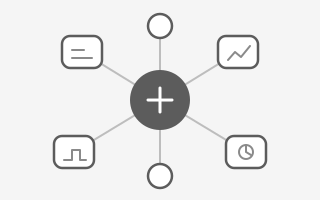
An ERP connects what keeps your company running: sales, purchasing, inventory, finance and people. When it works, nobody notices. When it does not, everyone feels it.
In recent years, ERP has changed shape. It is no longer a large, rigid system but an ecosystem: cloud modules connected to each other and to other tools, and increasingly assisted by AI.
That opens up options. It also demands more careful decisions.
From monolith to ecosystem
Gartner describes the shift clearly: traditional ERP systems were monolithic, while modern cloud ERP ecosystems embrace low-code flexibility and modular composability [1]. In practice, that means you can pair a solid core with specialized modules and connect them through APIs.
Investment is following the shift. Gartner projects worldwide software spending will grow 15.1% in 2026 to about $1.44 trillion, driven largely by generative AI [2].
Real-time data and embedded AI
The value of a modern ERP lies in its information. According to Panorama Consulting's 2026 ERP Report, business intelligence was the most significantly deployed digital initiative: 55.3% of organizations reported significant deployment [3]. Companies want to forecast on assumptions that change fast.
AI is heading the same way. Gartner expects 62% of cloud ERP spending to go to AI-enabled solutions by 2027, up from 14% in 2024. It also projects that finance teams using cloud ERP with embedded AI assistants will close their books 30% faster by 2028 [1]. And it estimates that 40% of enterprise applications will include task-specific AI agents by the end of 2026, up from less than 5% in 2025 [4].
There is a catch. Gartner notes that most CFOs are still in the early stages, held back by data quality, integration complexity and skills gaps [1]. Without clean, integrated data, AI has nothing to work with.
Off-the-shelf or custom ERP
There is no universal answer. It depends on how standard your operation is and where your competitive edge lies.
- Off-the-shelf ERP: makes sense when your processes are standard (accounting, payroll, purchasing) and you prefer to adopt established best practices.
- Custom ERP: makes sense when your operation has unique processes that set you apart, and a generic system would force you to change what works.
- Hybrid model: a commercial core for the standard pieces, and custom development, integrated via API, for what makes you different.
The most common risk is not picking the wrong brand, but discovering too late that the system does not fit. Panorama reports that more than a quarter of organizations exceeded their project budgets, with additional technology needs as the leading cause [3].
Organizations often discover fatal misfits late in the project, so they turn to additional technology, scope expansion, and custom builds.
Chris Devault, Panorama Consulting Group, 2026
How to decide with less risk
- Map your real processes before evaluating any software.
- Identify which processes are standard and which set you apart.
- Require open integration: documented APIs and access to your own data.
- Plan data migration and cleanup as a project in its own right.
- Implement in stages and measure results at each one.
Next step
At ISSMAR Developers, we build custom ERP and CRM systems and integrate existing platforms so your information flows in real time. If you are evaluating an ERP or your current system can no longer keep up, let's start with a review of your processes.
Sources
- Gartner Predicts Embedded AI in Cloud ERP Applications will Drive a 30% Faster Financial Close by 2028 Gartner, 2026
- Gartner Forecasts Worldwide IT Spending to Grow 13.5% in 2026, Totaling $6.31 Trillion Gartner, 2026
- Panorama Consulting Group Releases Latest Study of ERP Implementation Outcomes Panorama Consulting Group, 2026
- Gartner Predicts 40% of Enterprise Apps Will Feature Task-Specific AI Agents by 2026, Up from Less Than 5% in 2025 Gartner, 2025